How to Dress Gothic Without Getting It Wrong
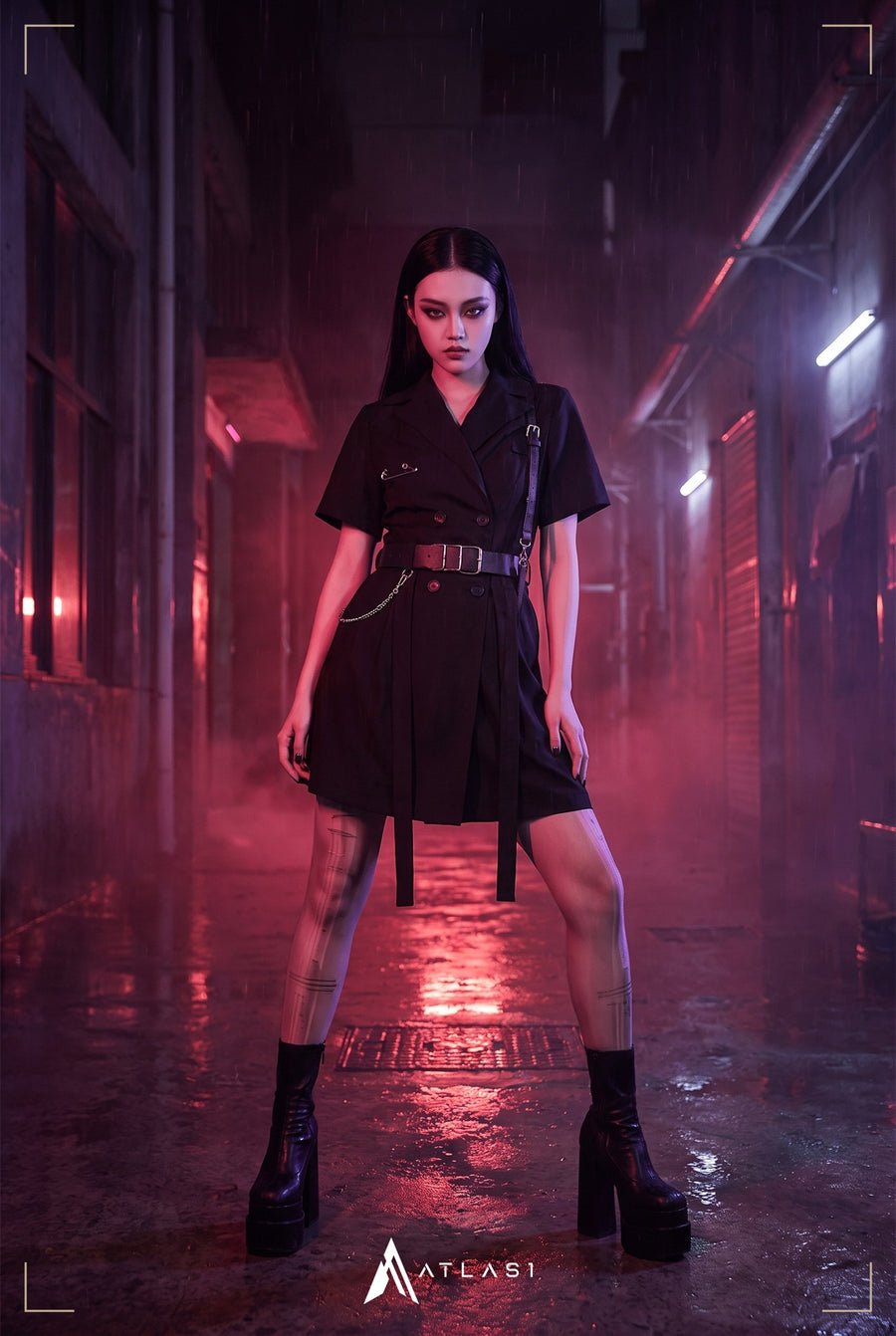
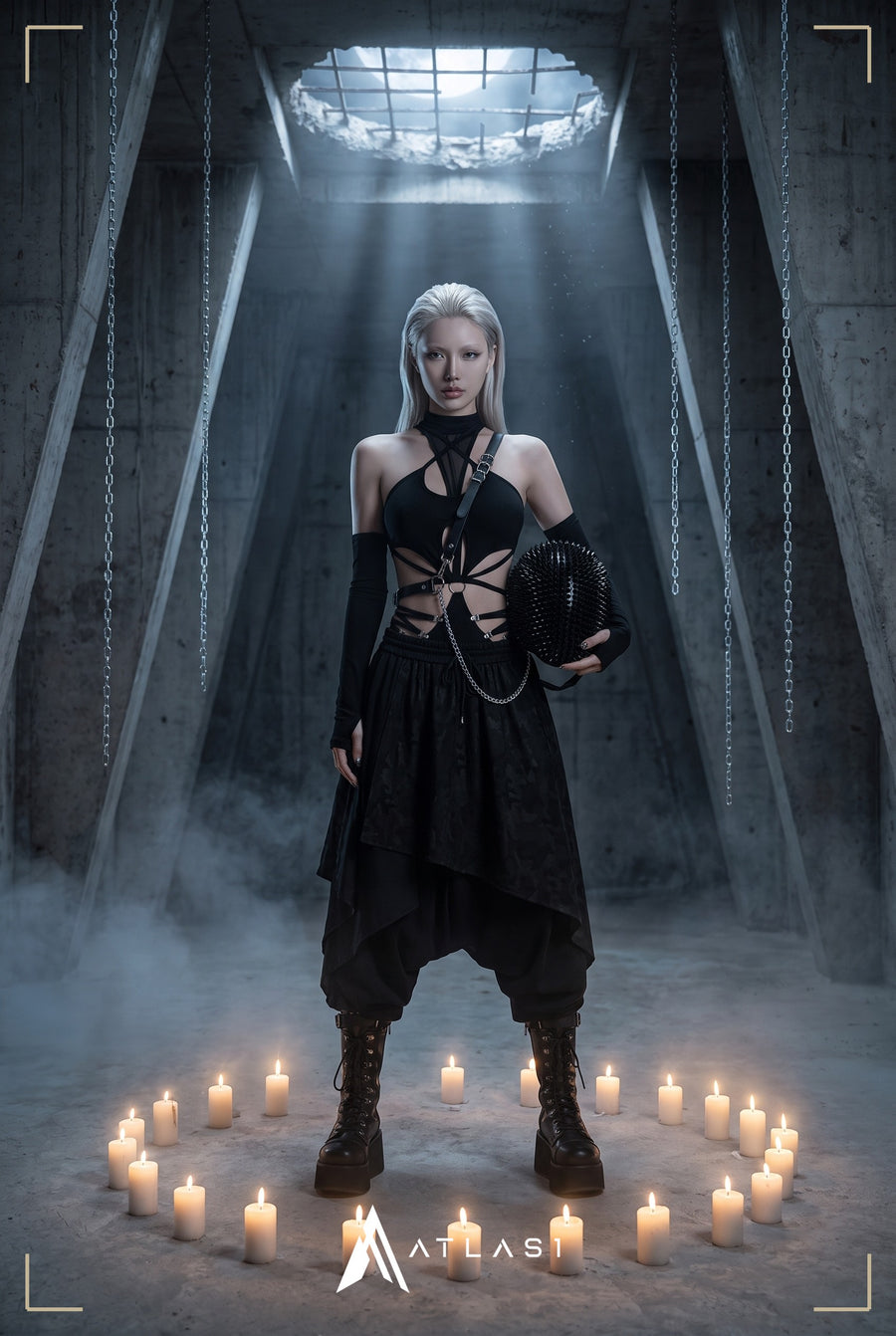
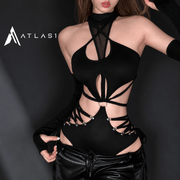
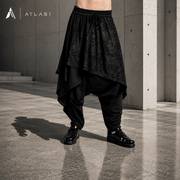
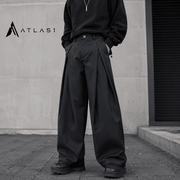
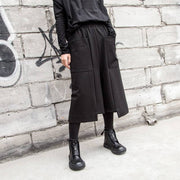
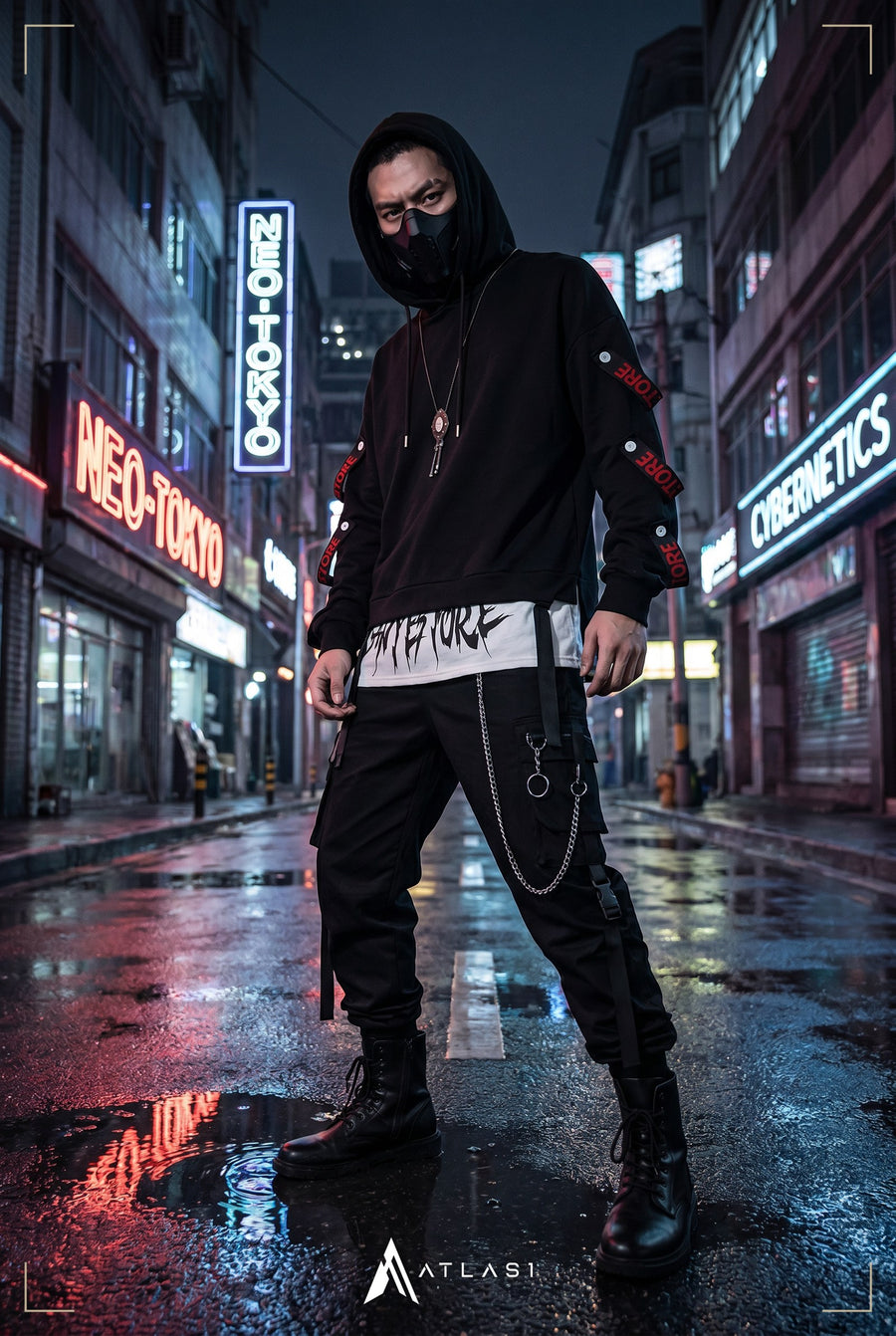
The most common mistake in gothic dressing is treating black as a single tone. It isn’t — matte black trousers next to a glossy leather harness next to mesh reads as dimensional and intentional. Flat, untextured all-black reads as an oversight. Lace, leather, mesh, ribbed knit, and tech-weave fabrics are all distinct surfaces; varying them is the entire craft.
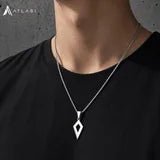
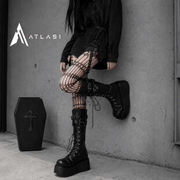
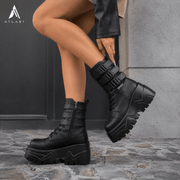
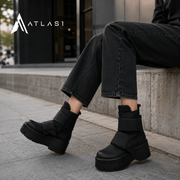
Keep the silhouette structured and one chrome or silver accent visible — a buckle, a ring, a chain. Platform or chunky-sole footwear grounds the look without softening it. For the neon-lit extension of this aesthetic, see cybergoth outfits; for the full dark-fashion collection, browse gothic techwear.
Gothic Outfits FAQ
What is a gothic outfit?
A gothic outfit is a dark-aesthetic look centred on black or near-black tones, dramatic silhouettes, and materials with strong texture or surface contrast — lace, leather, velvet, mesh, or structured tech fabric. The specific subgenre — Victorian goth, dark academia, techwear goth — shifts the materials and silhouette, but the commitment to darkness and intentional construction is constant.
Gothic vs goth vs cybergoth?
“Gothic” describes the aesthetic broadly — dark, dramatic, architectural. “Goth” is the subculture: music, community, and a look rooted in post-punk and Victorian reference. “Cybergoth” is a specific mutation of goth that absorbs rave culture, UV neon, and industrial hardware. All cybergoth looks are goth; not all goth looks are cybergoth.
How do I make an all-black outfit interesting instead of boring?
Vary the surface — matte against gloss, woven against mesh, structured against draped. Introduce one piece with visible hardware: a harness, a chain belt, oversized buckles. Fit matters more in monochrome than in any other palette; a slack silhouette in flat black has nothing to redeem it. Tighten the fit, layer the textures, and add exactly one metal accent.
What is gothic techwear?
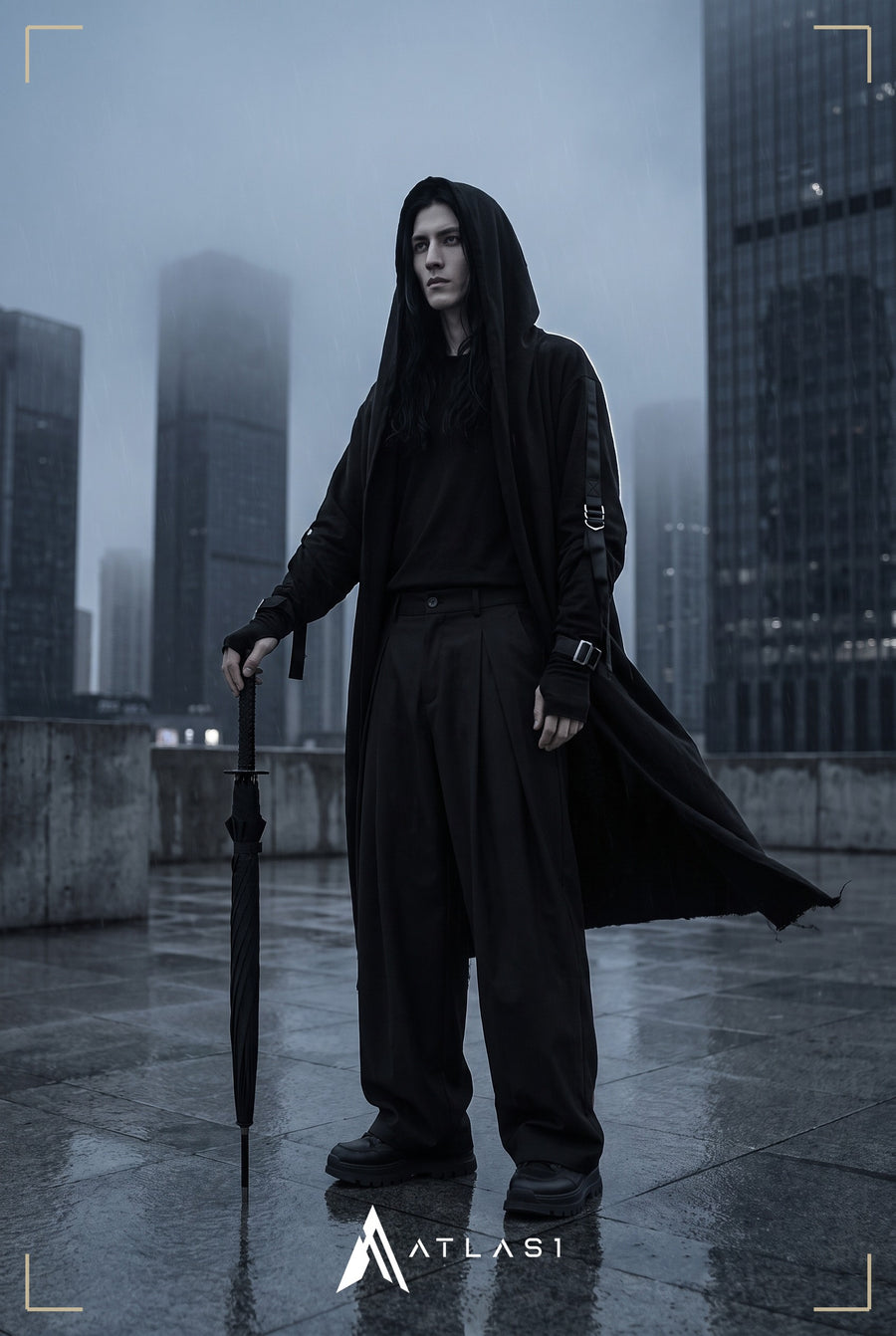
Gothic techwear is the overlap between goth aesthetics and technical performance clothing — waterproof ripstop fabrics, utility pocket systems, and modular harnesses in an all-black palette. It drops the Victorian romance of traditional goth in favour of a utilitarian, near-future silhouette. Think military surplus re-engineered in black with D-ring hardware and no brand insignia.
What shoes go with gothic outfits?
Platform boots are the canonical choice — chunky soles, black leather or synthetic upper, lacing or buckle closure. Creeper shoes are a lower-profile option that retains the right weight. Chelsea boots in matte black work for a cleaner, less theatrical line. Avoid thin-soled footwear: it undercuts the silhouette and makes the proportions look accidental rather than engineered.